Introduction:
Effective SaaS license management (2026) is the secret to keeping your modern business budget under control. Have you ever looked at your company’s monthly credit card statement and wondered, “Wait, when did we subscribe to this?” If so, you are not alone. In today’s digital world, almost every tool we use—from email and design software to project management systems—is a “SaaS” (Software as a Service) tool.
Choosing and managing these tools can feel overwhelming. It is very similar to the confusion a beginner feels when trying to pick a web hosting plan for the first time. There are too many options, hidden costs, and technical terms that make your head spin. But don’t worry! This guide is designed to clear the fog. By the end of this article, you will understand exactly how to handle your software subscriptions like a pro, saving your business time and money.
What is SaaS License Management?
Before we dive into the “how,” let’s explain the “what” in plain English.
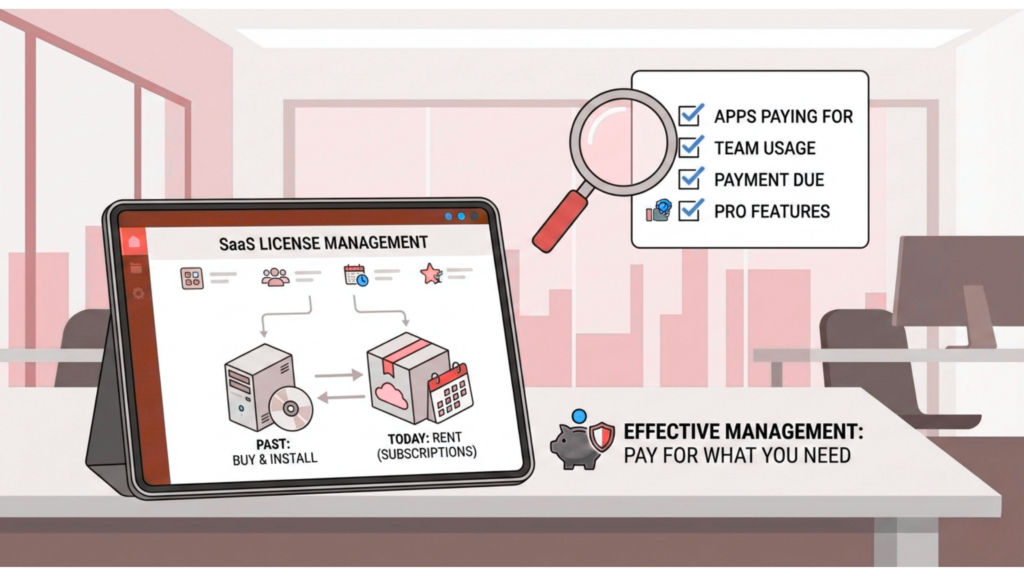
SaaS license management is simply the process of keeping track of all the software subscriptions your team uses.1 Think of it like a digital inventory. It involves knowing:
- Which apps are you paying for?
- Who in your team is actually using them?
- When is the next payment due?
- Are you paying for “pro” features that nobody uses?
In the past, you bought software once and installed it on a computer. Today, you “rent” software through monthly or yearly subscriptions.2 While this is convenient, it is very easy for these costs to spiral out of control. Effective management ensures you only pay for what you actually need.
Why Beginners Need to Get This Right
If you are just starting to grow your business or team, you might think, “I only have five apps, I don’t need a management system.” This is a common mistake.
As you grow, “Shadow IT” starts to happen. This is when an employee signs up for a free trial or a small subscription using a company email without telling anyone. Fast forward six months, and you are paying for three different tools that all do the same thing.
Starting with a clear strategy for SaaS license management helps you:
- Save Money: Stop paying for “zombie” accounts (users who left the company but still have active paid seats).
- Stay Secure: Ensure that sensitive company data isn’t sitting in an app you forgot you had.
- Boost Productivity: Make sure your team has the right tools without the clutter of useless ones.
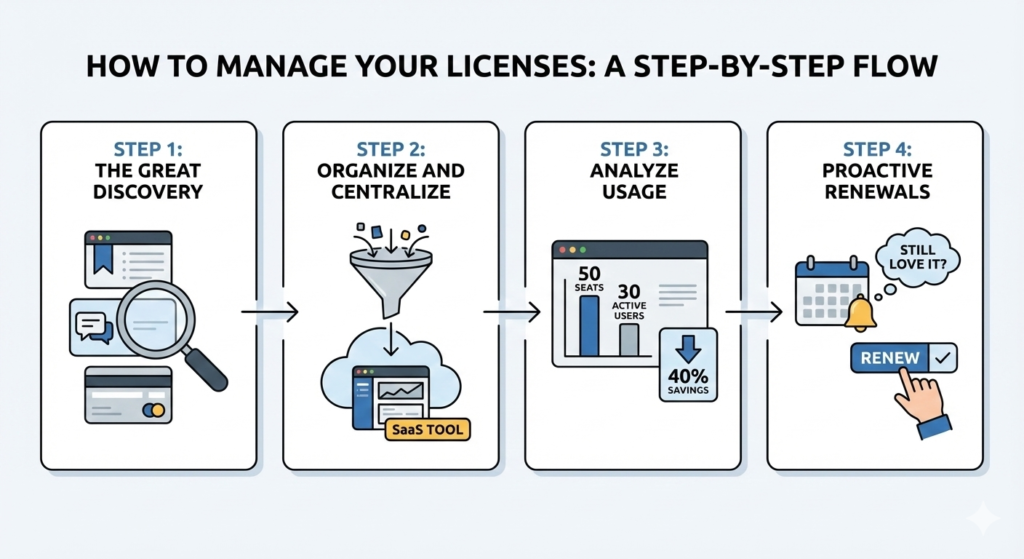
How to Manage Your Licenses: A Step-by-Step Flow
You don’t need to be a tech genius to get started. Just follow these simple steps:
Step 1: The Great Discovery
The first step is to find every single piece of software your team uses. Look through browser bookmarks, ask your team for a list, and—most importantly—check your financial statements. You might be surprised to find a $15/month subscription for a tool you haven’t used in a year.
Step 2: Organize and Centralize
Put all this information in one place. While a spreadsheet works for very small teams, a dedicated SaaS license management tool makes this much easier by automatically pulling data from your accounts.
Step 3: Analyze Usage
This is where the magic happens. Look at the data. If you paid for 50 seats of a communication tool, but only 30 people are logging in, you can instantly cut your bill by 40% next month.
Step 4: Proactive Renewals
Never let a subscription “auto-renew” without checking it first. Set a reminder 30 days before a big renewal to ask your team: “Do we still love this tool, or is there something better?”
Stop Wasting Money: The Essential SaaS License Management (2025) Guide for Beginners
Choosing the right tool is key. Here are our top recommendations for beginners in 2025, focused on ease of use and value.
1. Zluri
Zluri is a fantastic choice for beginners because it does the hard work for you. It has a massive library of apps it can “recognize” automatically.3 It shows you exactly who is using what and helps you remove unused licenses with just a few clicks.
2. CloudEagle
If you are worried about spending too much, CloudEagle is your best friend. It uses AI to track your usage and even helps you negotiate better prices with software vendors. It is like having a professional shopper on your team.
3. Zylo
Zylo is one of the most trusted names in the industry.4 It provides a very clear “dashboard” (a control panel) that gives you a bird’s-eye view of your entire software stack.5 It is very user-friendly and great for growing companies.+1
4. BetterCloud
BetterCloud focuses on “automation.”6 This means it can automatically give a new employee access to all their tools on their first day and take that access away when they leave. This saves hours of manual work.7+1
Comparison of Top Tools
To help you choose, here is a simple comparison of the best services for beginners:
| Tool | Pricing | Ease of Use | Customer Support | Best Use Case |
| Zluri | Mid-Range | Excellent | 24/7 Chat | Small to Mid-sized teams |
| CloudEagle | Value-Focused | Good | Dedicated Manager | Saving on renewal costs |
| Zylo | Enterprise | Very Good | High-Touch | Companies with big budgets |
| BetterCloud | Premium | Moderate | Excellent | Automating IT tasks |
SEO Checklist & Key Takeaways
Managing your software doesn’t have to be a nightmare. Here is what you should remember:
- Visibility is key: You cannot manage what you cannot see.
- Audit regularly: Check your usage every quarter to catch waste.
- Use the right tools: A dedicated platform for SaaS license management pays for itself by finding savings you would otherwise miss.
Conclusion
The world of software subscriptions can feel like a maze, but you now have the map. Whether you are a solo entrepreneur or a growing startup, taking control of your SaaS license management is one of the smartest financial moves you can make in 2025.
Don’t wait until your software budget is out of control. Take the first step today: look at your last three months of bank statements and list every software charge you see. That simple list is the beginning of your journey toward a leaner, faster, and more secure business.